
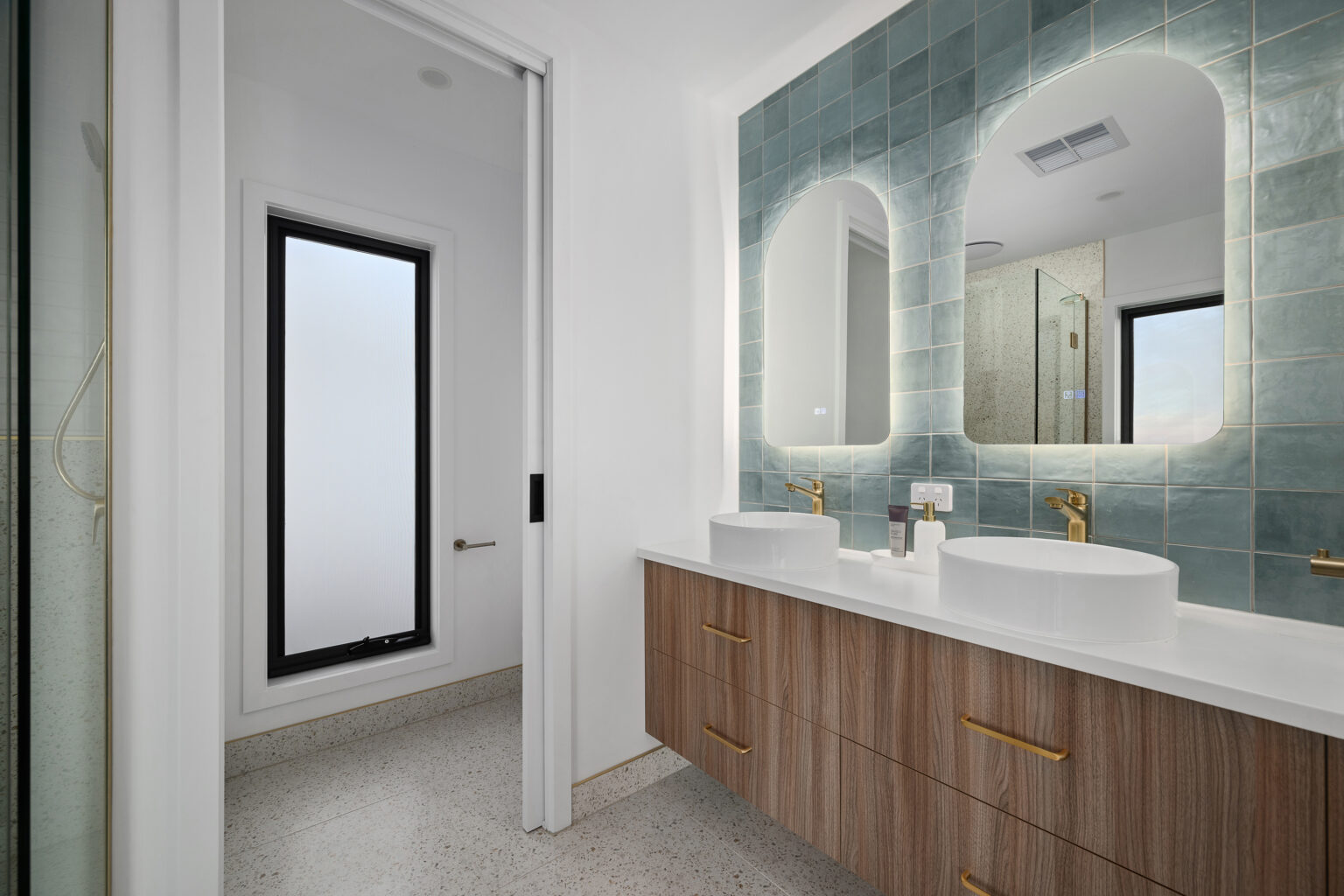
The quiet spaces shape how a home works.
When we think about the most important rooms in a home, the kitchen, living spaces and main bedroom usually come to mind first.
But some of the rooms that have the biggest impact on everyday life are rarely the ones we talk about first.
The walk-in wardrobe. The laundry. The pantry. The entry. The powder room.
These are the spaces working quietly in the background. They support daily routines, create storage, contain the mess and help the rest of the home feel calm and considered.
When these rooms are overlooked, everyday life can feel harder than it needs to. When they are designed around the way a household actually lives, the difference can be felt throughout the entire home.
At Crown, we believe thoughtful design isn’t just about the rooms that make the biggest visual statement. It’s about creating a home that works from the moment you wake up to the moment you come home.
The Laundry
The laundry is one of the hardest-working rooms in a home, yet it is often treated as an afterthought.
It needs to accommodate washing, sorting, folding, cleaning supplies, storage and all the everyday overflow that comes with running a household.
A well-designed laundry creates order behind the scenes, keeping mess contained and making repetitive household tasks feel more straightforward.
Consider:
- Bench space for folding and sorting, not just for appliances
- Storage for cleaning products and household essentials
- Durable finishes that can handle moisture and regular wear
- Space for hanging or air-drying clothes
- Positioning that connects naturally with bedrooms, outdoor areas or secondary access
When the laundry works, everything else feels easier.
The Pantry
A pantry does far more than store food.
It helps the kitchen function calmly and efficiently, even during the busiest moments. Without considered storage, appliances can quickly find their way onto benchtops, bulk items fill cupboards and the visual clarity of the kitchen starts to disappear.
A well-planned pantry allows the kitchen itself to remain clean, functional and visually resolved.
Consider:
- Shelf heights and storage depths suited to the way you shop
- Space for small appliances to be stored and used
- Power points where they are genuinely needed
- Good lighting for easy access
- Storage for bulk items and less frequently used appliances
- Easy access from the main kitchen without interrupting the cooking flow
The pantry is what allows the kitchen to stay composed.
The Entry & Mudroom
The entry is the first and last experience of the home each day.
Shoes, bags, coats, sporting equipment and everyday belongings can quickly create clutter if there isn’t somewhere intentional for them to go.
A considered entry or mudroom gives these items a place to land, helping the rest of the home feel more organised.
Consider:
- Storage designed around real life rather than perfect styling
- Seating for putting on and removing shoes
- Hooks or hanging space for coats and bags
- Durable flooring that can handle dirt and regular wear
- A clear transition between arrival spaces and the main living areas
- Welcoming lighting that feels considered, not purely functional
A mudroom doesn’t need to be large to be effective. The right combination of storage, seating and circulation can make even a compact space work harder.
The Powder Room
The powder room may be one of the smallest spaces in the home, but it can have a surprisingly big impact.
Because it is used for shorter periods, it can also be an opportunity to introduce texture, personality and considered materials without overwhelming the broader design.
Consider:
- Feature materials that add personality
- Lighting that feels warm and considered
- Proportions that make the most of a compact footprint
- Quality tapware and finishes that elevate the space
- Details that connect subtly with the wider home
- Practical positioning that provides privacy without disrupting the home’s flow
Small in size doesn’t mean small in impact.
Designing the Details From the Beginning
These spaces might not always feature at the top of the mood board, but they can have a significant influence on how a home feels every day.
The key is considering them early, rather than working out where the laundry, pantry or mudroom will fit once the main floor plan has already been established.
Think about how you move through your home.
Where do you come in? Where do the groceries go? Where does the washing happen? Where do your clothes, shoes and everyday belongings live? Where does the everyday clutter naturally collect? These questions can have a surprisingly big impact on how a home functions.
A well-designed home is about more than the rooms that make the biggest visual statement. It’s about creating a home that works for the people living in it, from the spaces where you gather to the quieter rooms supporting everything happening around them.
Because when the details work together, the whole home works better.
And sometimes, the rooms that matter most are the ones you notice least.


